Thatcher's Women
by Kay Adshead
Thatcher's Women was the name given to women from the north of England, who responding to widespread redundancies travelled to London in the 1980s to work as part-time prostitutes, taking money back to pay rent, feed, and clothe their children.
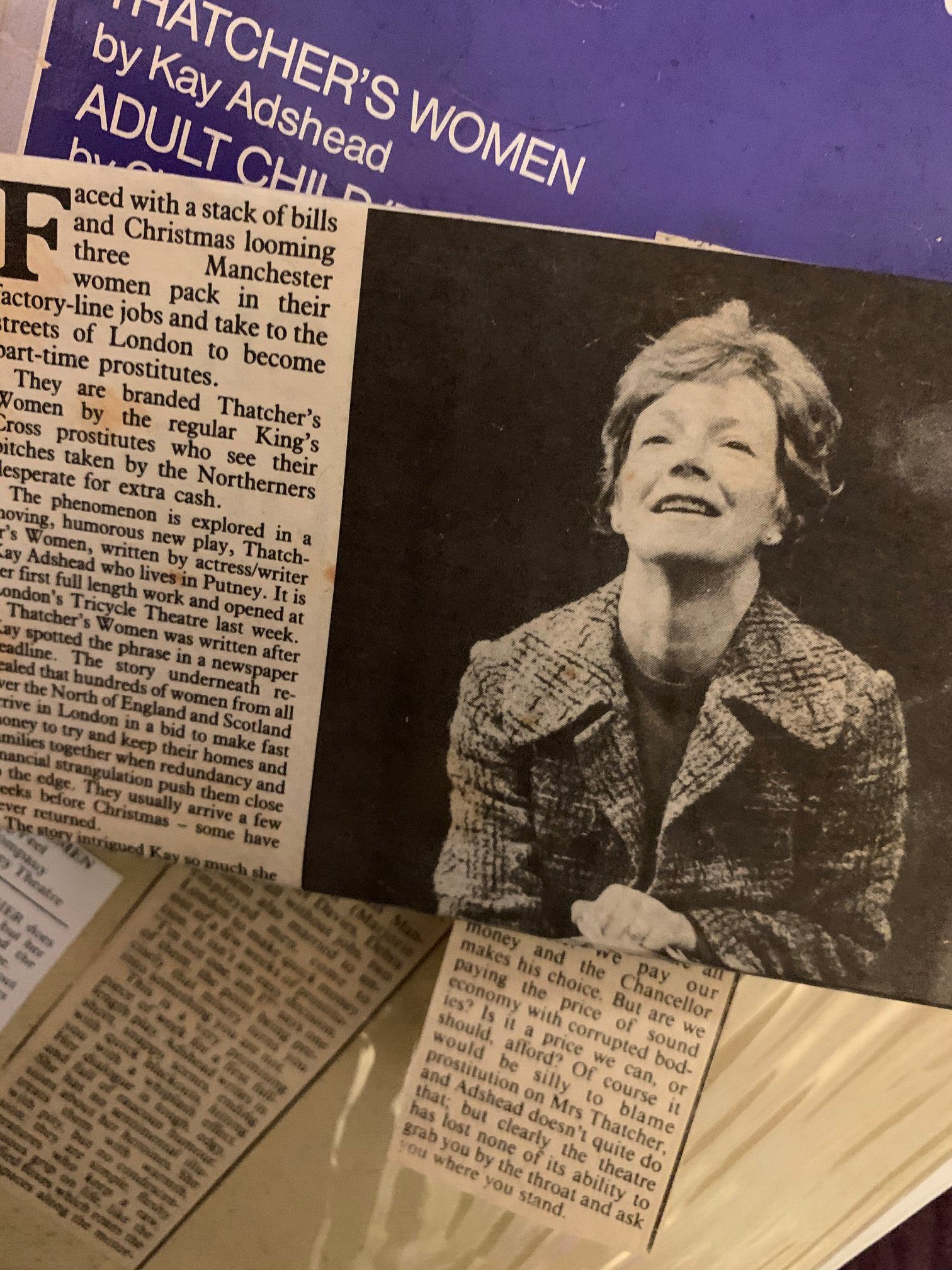
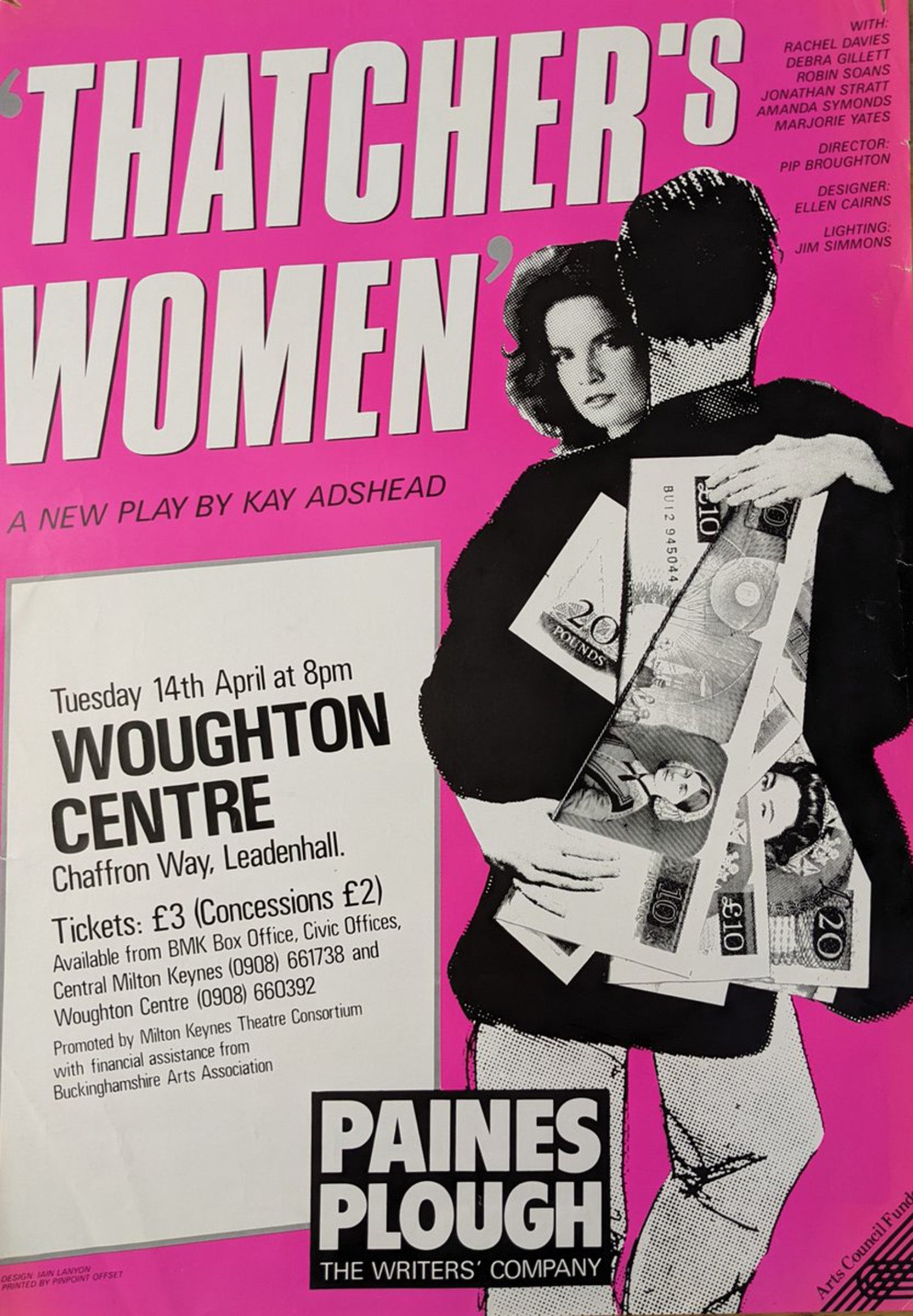
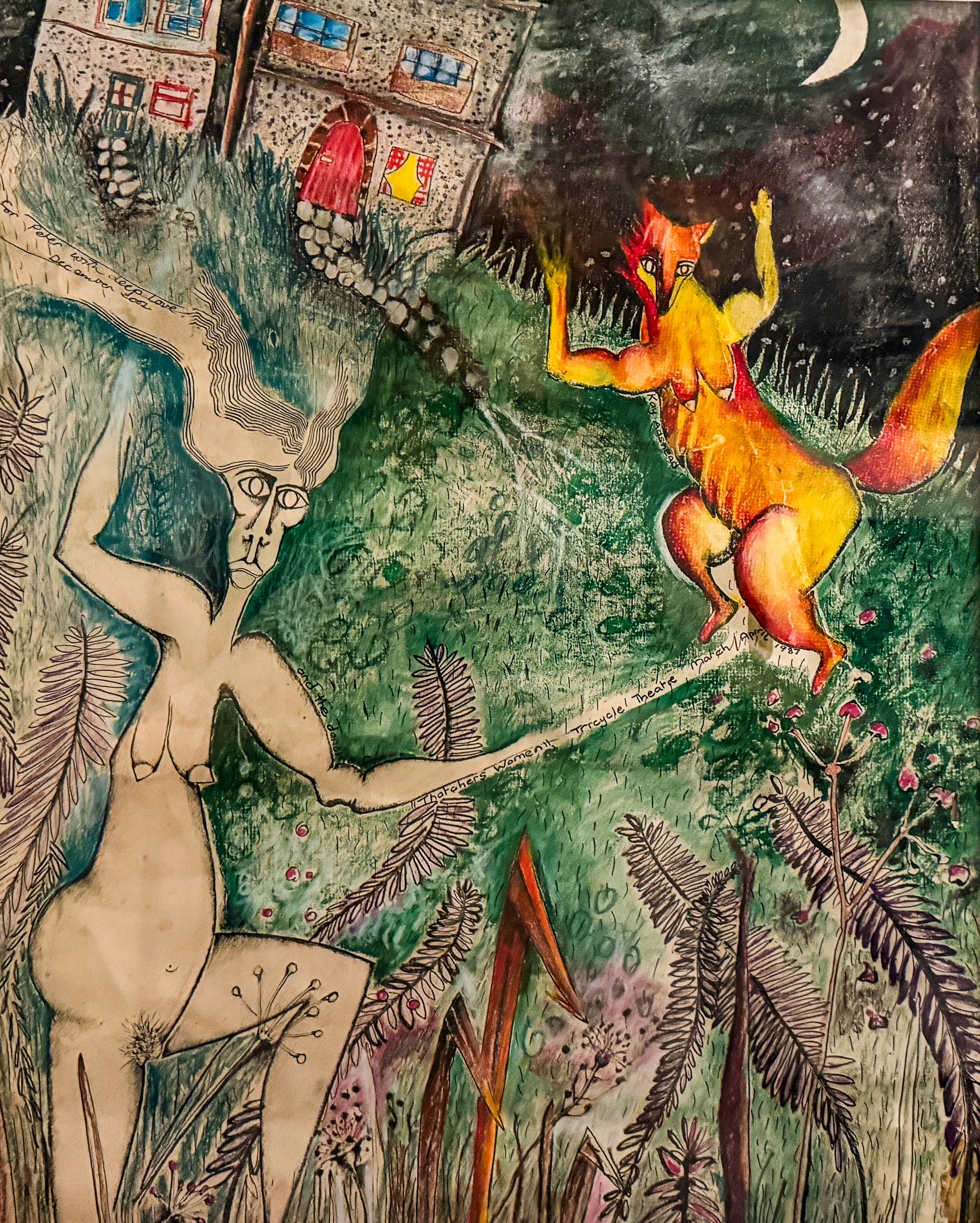
Manchester and London, 1985. When part of the northern food-processing factory where they work is closed, Marje, Norah and Lynda — with unemployment and household debts pressing on them — travel south intending to earn money through prostitution. What begins with comic and satirical energy grows steadily darker as each woman meets the danger, humiliation and apparent economic opportunity of the capital in her own way.
Marje, timid and ashamed, endures robbery, assault and police harassment on Wandsworth Common, but finds an unexpected strength — mirrored in the urban fox she befriends and feeds — and returns north with a firmer sense of herself. Norah discovers she cannot make herself have sex with men she does not desire, and her London becomes the King's Cross station buffet, a platonic friendship, and a tourist's-eye view of a wealth she can only serve; she too returns north. Seventeen-year-old Lynda, whose idea London largely was, rises from the streets into West End clubs and hotels, earns far more than the others at escalating risk, and stays — planning a taxable escort agency and adopting the rhetoric of individual enterprise. The exploited teenager has, in effect, absorbed the values of the political system that created her predicament.
The title comes from a phrase reportedly coined at King's Cross itself. In a late-night television discussion, a representative of the English Collective of Prostitutes described married women travelling temporarily from the north, the Midlands and Scotland to earn enough in London for rent and family expenses; the established King's Cross women called the newcomers "Thatcher's women." The title is therefore bitterly double-edged: all three protagonists are products of Thatcherite economics, but only Lynda becomes "Thatcher's woman" ideologically.
The play emerged directly from the conditions of the mid-1980s — industrial closures across the north, women left to support households in which men had also lost their jobs, and a King's Cross closely associated with street prostitution and with sex-worker organisation (the English Collective of Prostitutes had occupied Holy Cross Church there in 1982, protesting against police violence and false arrest).
Formally, the play begins in social realism — a noisy factory finishing room, repetitive work, sudden redundancy — and gradually opens into symbolism, fantasy and transformation. Its central non-naturalistic image is the fox: hunted, poisoned and driven from place to place, yet surviving. It mirrors Marje's precarious existence, and her final extended, poetic speech associated with the fox marks a recovery of language and self-possession that the realistic plot alone could not provide. The sexual encounters themselves are not staged voyeuristically — they happen offstage or are conveyed through preparation, negotiation and aftermath, keeping the emphasis on money, danger and the women's own interpretations of what has happened.
The factory closure makes the play's central metaphor explicit: the women first sell their labour in an industrial workplace, and when that work disappears they are pushed towards selling sexual access to their bodies — the same bodies used for economic production, now with greater shame and danger attached. Each protagonist embodies a different response to the enterprise language of the period: Norah cannot participate; Marje participates but ultimately resists; Lynda converts exploitation into a business model, and comes to blame women who have not "succeeded." The play asks whether "choice" has any meaningful content when the alternatives are poverty, dependence or dangerous work.
The play is usually read as socialist-feminist theatre, connecting gender oppression with class inequality and the political geography of the 1980s — industrial decline in the north against conspicuous prosperity in parts of the south. It has been discussed alongside Jim Cartwright's Road, and invites comparison with Caryl Churchill's Top Girls: where Churchill examines women who prosper by adopting competitive, individualistic values, Adshead concentrates on the women largely excluded from that model of success. A later profile called it a "proto-Band of Gold" prostitution drama — a comparison it predates by several years. It is often described as Kay Adshead's first full-length play, and one of the works that established her reputation as a political dramatist.
“Kay Adshead’s writing demonstrates theatre has lost none of its ability to grab you by the throat and ask you where you stand ... Her dialogue is tough, edgy, full of raucous humour. She has no sentimental illusions about her heroines. She treat them with warmth, with pity, but no condescension ... an exceptionally promising first play ...John Peters, The Sunday Times
This impressive play by Kay Adshead is her first full-length play and is attractively staged by Pip Broughton to make an inventive fast-paced evening.The Stage, 26 March 1987
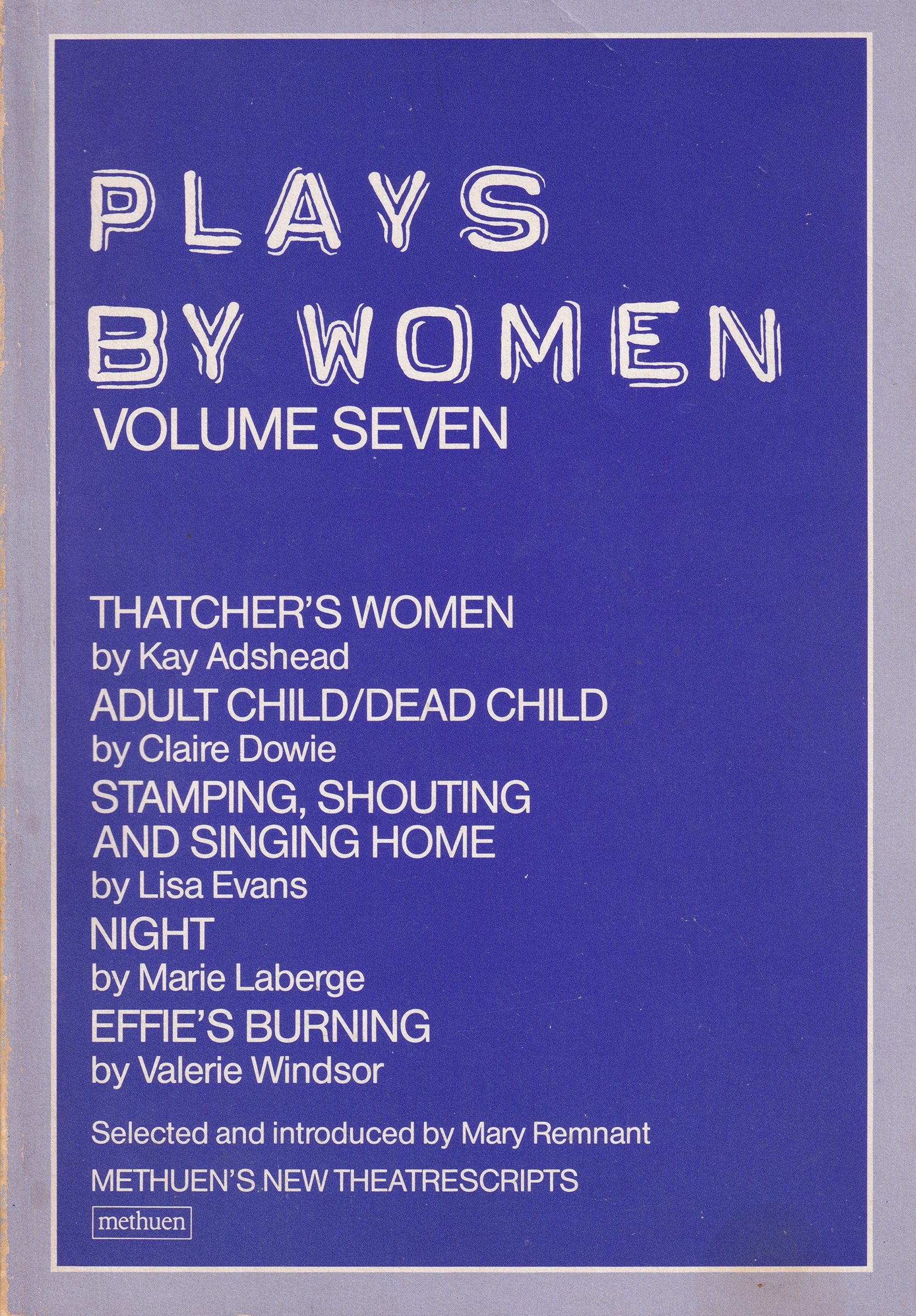
The full script is published in Plays by Women: Volume Seven, edited by Mary Remnant (Methuen, London, 1988; ISBN 978-0-413-17490-1). No standalone edition or authorised online text exists, and the anthology is out of print — copies can be found through public and university libraries, interlibrary loan, specialist theatre collections and second-hand booksellers.